Groovy Baby Font
If you’ve ever scrolled past a vintage concert poster, a hand-poured coffee bag label, or an indie band’s album cover and felt an instant jolt of warmth and personality—that’s the energy Groovy Baby delivers. It’s not just another decorative font. It’s a playful, confident, unapologetically cheerful typeface designed to bring levity, authenticity, and visual rhythm to projects that need breathing room and charm.
A Font That Feels Like a Smile
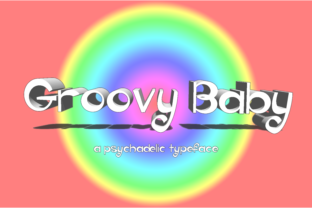
Groovy Baby is a free-spirited, rounded sans-serif with subtle retro flair—think 70s sunshine meets modern clarity. Its letterforms are relaxed but intentional: soft curves, generous x-height, open counters, and gentle inconsistencies that mimic hand-drawn friendliness without sacrificing legibility. There’s no forced quirkiness here—just natural warmth baked into every glyph.
Unlike many display fonts that sacrifice function for flash, Groovy Baby holds up surprisingly well at medium sizes (16–24px) on screen and in print. It’s not meant for long paragraphs—but it shines where tone matters most: headlines, callouts, product names, social banners, and short-form messaging. Its rhythm invites pause, not skimming.
Where Groovy Baby Fits—And Where It Doesn’t
Not every project needs a laid-back vibe—and that’s okay. Groovy Baby works best when your goal is approachability, nostalgia, or joyful contrast. Here’s where it lands with impact:
- Branding & packaging: Craft breweries, plant-based snack labels, boutique skincare lines, and eco-conscious startups use Groovy Baby to signal care, simplicity, and human-centered values—without resorting to clichéd “handwritten” fonts.
- Digital touchpoints: A landing page hero headline, a newsletter banner, or a CTA button labeled “Let’s Go!” gains instant warmth with Groovy Baby. Paired with a clean sans-serif like Inter or Lato for body text, it creates clear visual hierarchy and emotional resonance.
- Educational & community materials: Teachers designing classroom posters, nonprofit teams building event flyers, or local makers promoting workshops find Groovy Baby lowers perceived barriers—it says “you belong here,” not “this is formal.”
- Music & creative projects: From Bandcamp album art to Spotify playlist covers and vinyl sleeve typography, Groovy Baby adds texture and soul without competing with imagery or sound.
What Makes It Stand Out Visually
Three qualities set Groovy Baby apart from similar casual fonts:
- Consistent looseness: The spacing between letters feels intuitive—not tight, not sprawling—just comfortably conversational. That helps it scale gracefully across devices.
- Weight balance: Its regular weight has enough presence to hold attention, but not so much that it overwhelms smaller layouts. No bold variant is needed—the design carries emphasis through shape, not thickness.
- Character personality: Look closely at the lowercase a, g, and y. They’re not generic—they have distinct, friendly shapes that reinforce voice without demanding attention.
Real-World Use Cases You Can Try Today
You don’t need a full rebrand to test Groovy Baby. Start small—and observe how it shifts perception:
- Swap your email subject line font in Mailchimp or ConvertKit for one campaign. Track open rates—not because Groovy Baby magically boosts numbers, but because its tone may better match your audience’s expectations for warmth and authenticity.
- Add it to your Instagram Stories template for limited-time offers or new blog posts. Its readability at small sizes (with sufficient contrast) makes it ideal for quick-scanning mobile viewers.
- Use it for workshop titles in Canva—especially if you teach yoga, art journaling, or sustainable living. It signals “this isn’t rigid instruction; it’s shared exploration.”
- Apply it to physical items like thank-you cards, recipe cards, or gift tags. Printers consistently report that clients notice and comment on the friendliness of Groovy Baby-set text—even before reading the words.
Practical Tips Before You Type
Like any expressive font, Groovy Baby rewards thoughtful application. Keep these in mind:
✅ Pair it intentionally: It thrives alongside neutral, highly legible typefaces—think Open Sans, Roboto, or even Georgia for contrast. Avoid pairing it with other high-personality fonts (e.g., another retro script or geometric display face). Let Groovy Baby be the voice; let the supporting font be the ear.
✅ Respect contrast and color: Its rounded forms soften at low contrast. Always test on your target background—especially light gray or pastel tones. Dark charcoal or navy on off-white usually works better than black on white for extended use.
⚠️ Don’t force it into functional roles: Skip using Groovy Baby for navigation menus, form labels, or pricing tables. Its strength lies in evoking feeling—not delivering dense information.
⚠️ Check licensing early: While Groovy Baby is free for personal and commercial use, always verify the license terms where you download it. Some platforms bundle fonts with usage restrictions—especially for embedded web fonts or SaaS products.
Why Tone Matters More Than Ever
In a world saturated with algorithm-driven content and templated visuals, people respond instinctively to authenticity—not polish. Groovy Baby doesn’t pretend to be serious, corporate, or cutting-edge. It’s honest about its purpose: to make something feel human, grounded, and kind.
That’s why educators choose it for student-facing materials, why small businesses use it on “We’re Closed for Vacation” signs, and why designers reach for it when a client says, “I want it to feel like *us*—not like a stock photo.” It’s not a shortcut to personality. It’s a tool that amplifies what’s already there.
So if your next project calls for ease over edge, warmth over wow, or sincerity over slickness—give Groovy Baby space to breathe. Set a headline. Step back. See if it makes you smile. If it does? You’ve already found its real value.