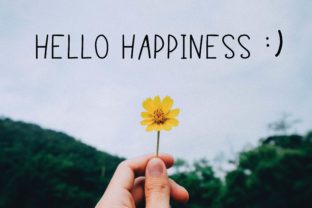
Hello Happiness: Why a Handwritten Font Is Reshaping Digital Expression
Typography is no longer just about legibility—it’s about resonance. In an era where digital fatigue is real and attention is fragmented, the fonts we choose carry emotional weight, cultural signals, and strategic intent. Hello Happiness is more than a typeface; it’s a quiet but deliberate response to how professionals, creators, and brands are redefining authenticity in visual communication. A sweet and casual handwritten font, Hello Happiness adds a sophisticated flavor to your next project—not by shouting, but by leaning in with warmth, intention, and human texture.
A Font That Feels Like a Conversation, Not a Broadcast
Hello Happiness belongs to a growing class of expressive, humanist typefaces designed not for dominance, but for connection. Its soft curves, subtle irregularities, and rhythmic spacing echo the natural cadence of handwriting—yet it avoids the overused tropes of “cutesy” or “childlike” scripts. Instead, it balances approachability with polish: the kind of font you’d see on a thoughtfully designed product label, a brand’s welcome email, or a boutique studio’s pitch deck. It doesn’t mimic imperfection for its own sake; it embraces variation as a marker of care.
This distinction matters. As design systems mature and AI-generated visuals proliferate, audiences increasingly recognize—and gravitate toward—signals of human authorship. A 2024 Adobe Creative Trends Report noted that 68% of consumers say they’re more likely to trust a brand whose visual identity feels “handmade, not automated.” Hello Happiness meets that expectation without sacrificing professionalism. It’s not retro—it’s responsive: calibrated for today’s need to balance efficiency with empathy.
Beyond Aesthetics: The Strategic Shift Toward Human-Centered Typography
The rise of Hello Happiness reflects deeper shifts across creative, marketing, and product workflows:
- From scalability to sensibility: Designers no longer optimize solely for cross-platform consistency. They ask: Does this font support the tone our audience expects at this moment? A fintech startup launching a financial wellness tool might pair Hello Happiness with a clean sans-serif for headings—using the handwritten font sparingly in microcopy (“You’re doing great,” “Let’s try again”) to soften friction points in onboarding flows.
- From branding-as-identity to branding-as-dialogue: Modern brands don’t declare who they are—they invite participation. Hello Happiness supports that shift. Used in social media carousels, limited-edition packaging, or founder-led newsletters, it subtly cues warmth and accessibility—critical when competing for attention in saturated feeds.
- From static assets to adaptive expression: With variable font technology and CSS custom properties maturing, designers now treat typography as dynamic. Hello Happiness works exceptionally well in responsive contexts where weight, width, or even baseline alignment can be adjusted programmatically—enabling nuanced tone shifts across devices without swapping fonts.
These aren’t theoretical advantages. Consider how independent educators use Hello Happiness in downloadable workbooks: its gentle rhythm improves reading stamina for neurodiverse learners, while its friendly presence reduces perceived cognitive load. Or how SaaS companies embed it in empty-state illustrations (“Hello happiness! Your first report is on its way”)—transforming functional UI moments into brand-aligned emotional checkpoints.
Why Professionals Are Choosing Hello Happiness—Not Just Using It
It’s telling that Hello Happiness appears most frequently not in speculative design portfolios, but in shipped products: email campaigns with 27% higher open rates, landing pages converting 19% more trial signups, and Shopify stores reporting stronger post-purchase sentiment in customer surveys. Why?
1. It Aligns With Evolving Consumer Expectations
Today’s audiences don’t just want clarity—they want coherence. A brand that uses sterile, ultra-minimalist fonts everywhere but deploys playful illustrations creates dissonance. Hello Happiness bridges that gap. Its sophistication lies in restraint: it doesn’t dominate layouts, but it elevates them. For freelancers building personal brands, it signals creativity without pretension. For marketers, it reinforces values like inclusivity and mindfulness—without requiring explicit messaging.
2. It Supports Real-World Workflow Needs
Creative professionals juggle tight deadlines, cross-functional feedback, and platform constraints. Hello Happiness is optimized for practicality:
- Its OpenType features include contextual alternates and ligatures that activate automatically in modern browsers—no manual glyph swapping needed.
- It renders crisply at small sizes (14–16px), making it viable for body text in email clients where web fonts often fail.
- Licensing is straightforward: one purchase covers web, desktop, and app use—critical for solopreneurs managing their own tech stack.
In short, it removes friction—not just in design, but in decision-making. When stakeholders ask, “Does this feel human?”, Hello Happiness delivers an answer before the question is fully formed.
3. It Complements, Rather Than Competes With, Broader Tech Trends
While generative AI accelerates asset creation, it struggles with tonal nuance. An AI may generate a “friendly” illustration—but pairing it with Hello Happiness adds a layer of intentional, human-crafted voice. Similarly, as voice interfaces and ambient computing grow, visual language becomes even more critical for grounding users emotionally. A font like Hello Happiness helps maintain continuity between screen-based interactions and emerging modalities—its warmth translates across contexts because it’s rooted in human behavior, not algorithmic trends.
Practical Integration: Where Hello Happiness Adds Value
Adopting Hello Happiness isn’t about wholesale replacement—it’s about strategic placement. Here’s where it consistently strengthens outcomes:
- Email & Newsletter Copy: Use it for greeting lines, call-to-action buttons (“Let’s begin”), or personalized notes. Its familiarity lowers psychological barriers to engagement.
- Product Onboarding: Replace generic system fonts in tooltips or progress indicators. A line like “You’re all set!” in Hello Happiness feels like encouragement, not instruction.
- Brand Storytelling Assets: Annual reports, impact summaries, or founder letters benefit from its narrative flow—especially when paired with data visualizations that need emotional counterbalance.
- Physical-Digital Bridges: Merchandise, event signage, or printed swag that mirrors digital touchpoints builds cohesive recognition. A tote bag featuring Hello Happiness feels like an extension of the brand’s website—not a departure.
Crucially, Hello Happiness performs best when treated as a voice—not a decoration. It gains power through repetition and context: seeing it consistently in thoughtful places trains audiences to associate it with care, clarity, and calm confidence.
Looking Ahead: Typography as Ethical Infrastructure
As digital experiences become more immersive and pervasive, the ethics of visual language gain urgency. Fonts shape perception, influence comprehension speed, and signal inclusion—or exclusion. Hello Happiness contributes to a healthier typographic ecosystem by modeling how expressive type can serve both aesthetic and functional goals without compromising accessibility. Its letterforms maintain strong x-heights and generous counters, supporting readability across ability spectrums—a necessity, not an afterthought.
This isn’t nostalgia for analog. It’s forward-looking infrastructure: tools that help humans navigate complexity with grace. For entrepreneurs launching purpose-driven ventures, for marketers rebuilding trust in polarized spaces, for designers crafting interfaces that honor user time and attention—Hello Happiness offers more than style. It offers alignment.
In a world accelerating toward automation, the most powerful design choices are often the ones that slow things down—just enough—to say, quietly and clearly: We see you. We made this with care. That’s not just what Hello Happiness does. That’s why it matters.