Meet Margareta: A Modern Script Font That Adds Charm—Without the Pitfalls
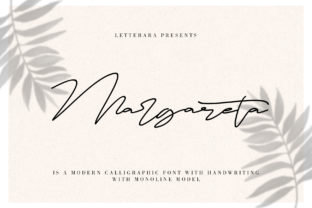
Margareta is a modern and charming script font designed for warmth, personality, and subtle elegance. It’s not overly ornate or difficult to read—instead, it balances fluid letterforms with clean spacing and consistent weight. That’s why crafters, small business owners, educators, and bloggers reach for Margareta when they want handwritten authenticity without sacrificing legibility or professionalism.
Why People Choose Margareta (and Why That Choice Can Backfire)
Many choose Margareta because it feels approachable—ideal for greeting cards, wedding invites, social media graphics, or product labels. But here’s what often gets overlooked: font choice isn’t just about aesthetics—it’s about function, context, and compatibility. A beautiful script like Margareta can fall flat—or even miscommunicate—if used without intention.
For example, one freelance designer ordered Margareta for a client’s café menu, assuming its friendly curves would “feel cozy.” But when printed at small sizes on laminated boards, the fine hairlines vanished, and letters like “a” and “g” blurred together. The result? Customers squinted, staff repeated orders, and the brand felt unintentionally unclear—not charming.
1. Assuming Margareta Works Well in All Sizes and Formats
Margareta shines at 24pt and above in digital displays and at 36pt+ in print—but it’s not built for body text, tiny app buttons, or embroidery files. Its delicate terminals and variable stroke contrast don’t scale down gracefully. Unlike robust sans-serifs or monoline scripts, Margareta needs breathing room.
Better approach: Use Margareta for headlines, logos, quotes, or short callouts only. Pair it with a highly legible companion font (like a neutral geometric sans) for supporting text. Test it at your final output size—on screen and in print—before committing.
2. Overlooking Licensing and Technical Compatibility
Margareta is available in both free trial and premium versions—but not all sources offer the same features. Some free downloads lack OpenType features (like ligatures or alternate characters), while others omit web font formats (.woff2) or desktop licensing for commercial use. One educator downloaded a “free Margareta” from an unverified site, embedded it in a Google Slides template she sold on Etsy—and received a copyright notice weeks later.
Better approach: Buy directly from reputable foundries or authorized resellers (like Creative Market or the designer’s official site). Check the license explicitly for your use case: personal, commercial, web, app, or merchandise. Look for .otf/.ttf files with OpenType support—and verify that web fonts include proper subsetting and CORS headers if self-hosting.
3. Ignoring Contextual Fit and Audience Expectations
Script fonts like Margareta carry strong tonal associations—playful, romantic, artisanal, or nostalgic. That works beautifully for a handmade soap label or a poetry chapbook cover. But it can clash with serious topics: a financial advisor’s report, a university syllabus, or a healthcare brochure may unintentionally signal informality or lack of authority.
Better approach: Ask yourself: *What impression do I need this text to convey—and who will see it first?* If your audience values clarity over charm, or if your message requires trust and precision, Margareta may be better reserved for accents (a logo tagline, a section divider) rather than primary messaging. When in doubt, test two versions side-by-side with real users—even a quick poll among five colleagues reveals more than assumptions.
What to Check Before You Download or Buy Margareta
- Character set: Does it include extended Latin characters (like é, ñ, ü) if you serve multilingual audiences? Does it support punctuation and numerals that match the script’s rhythm—or do digits look jarringly mechanical?
- Weight and style options: Margareta is typically offered as a single weight. If you need bold or italic variants for hierarchy, you’ll need to pair it thoughtfully—not fake bold in design software (which distorts letterforms).
- Rendering performance: On Windows, older browsers, or low-resolution screens, some script fonts render poorly due to hinting limitations. Preview Margareta in your target environment—especially if it’ll appear in email clients or PDFs viewed on mobile devices.
- File integrity: Avoid compressed archives with vague names (“Margareta_font.zip”) from unknown domains. Legitimate releases include clear documentation, a license file, and version notes.
Realistic Pairings That Elevate Margareta—Not Compete With It
Margareta doesn’t need to stand alone to succeed. In fact, its strength lies in contrast. Try these tested combinations:
- For branding: Margareta headline + Inter or Manrope for clean, accessible body copy. The neutral sans grounds the script’s warmth without dulling it.
- For social graphics: Margareta quote + IBM Plex Sans caption. Their shared x-height and open apertures create visual harmony—even at small sizes.
- For print crafts: Margareta title + Cardo (a gentle serif) for invitations. Both share organic texture but different roles—script for emotion, serif for readability.
Avoid pairing Margareta with other scripts, ultra-thin fonts, or decorative typefaces unless you’re deliberately curating a layered, editorial look—and even then, limit it to one accent per layout.
Final Thought: Let Margareta Serve Your Purpose—Not the Other Way Around
Margareta is thoughtful design—not magic. It won’t fix weak hierarchy, compensate for poor color contrast, or make cluttered layouts feel intentional. But when chosen with care, applied with restraint, and paired with purpose, it adds sincerity and distinction that generic fonts simply can’t replicate.
So before you drop it into your next project, ask: Is this where charm supports clarity—or distracts from it? Does this usage honor what Margareta does best? And most importantly: have I tested it where it will actually live?
That kind of attention—practical, respectful, and human-centered—is what turns a pretty font into a meaningful tool.