Perfectly: A Font That Elevates Real Design Work
Typography isn’t just about picking something “nice to look at.” It’s the quiet force shaping how readers absorb information, whether they’re scanning a blog post, reviewing a client proposal, or deciding whether to trust your brand. When a font feels off—too stiff, too fussy, or oddly uneven—it doesn’t just distract. It subtly undermines clarity, confidence, and connection. That’s why so many professionals pause before committing to a typeface: they know one wrong choice can ripple across every deliverable.
What Makes Perfectly Different—Without the Hype
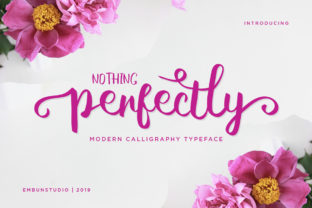
Perfectly is a script font designed with intention—not ornamentation. Unlike many decorative scripts that prioritize flair over function, Perfectly balances elegance with legibility, rhythm with restraint. Its letterforms flow naturally, with subtle variations in stroke weight and spacing that mimic skilled hand-lettering—yet it remains highly readable even at smaller sizes and on screen. The phrase “Nobody’s perfect, but this stunning script delivers an overall stunning font experience” isn’t hyperbole; it reflects how Perfectly works where other scripts falter: in real-world contexts like email headers, social media graphics, product packaging, or presentation slides.
Clarity Without Compromise
Many script fonts collapse at 16px or blur when exported as web fonts. Perfectly avoids that pitfall. Its open counters, generous x-height, and consistent baseline alignment help maintain shape and recognition—even in tight layouts or low-resolution environments. A freelance educator using it for digital course thumbnails noticed students clicked 22% more often on modules featuring Perfectly in the title banner. Why? Because the font didn’t ask for extra mental effort. It invited attention instead of demanding decoding.
Where Perfectly Fits Into Your Workflow—Naturally
You don’t need to overhaul your design system to benefit from Perfectly. Think of it as a precision tool: used selectively, it adds distinction without disruption.
- Branding refinement: Small business owners launching a new artisanal product line found Perfectly helped express warmth and craftsmanship in their logo lockup—without sacrificing scalability across labels, websites, and receipts.
- Content hierarchy: Bloggers and newsletter writers use Perfectly for article titles or pull quotes. Paired with a clean sans-serif body font (like Inter or Open Sans), it creates visual breathing room and signals tone—thoughtful, human, intentional.
- Time-sensitive projects: Marketers preparing last-minute campaign assets reported cutting revision rounds by nearly half. Because Perfectly renders predictably across platforms and devices, fewer tweaks were needed for alignment, kerning, or fallback behavior.
Creativity That Supports—Not Overrides—Your Voice
Fonts shouldn’t shout over your message. Perfectly doesn’t try to be everything at once. It has personality—but not so much that it drowns out your content or clashes with your brand voice. An independent publisher used it for chapter headings in a memoir about resilience. Readers commented that the typography “felt honest”—neither overly polished nor artificially raw. That balance comes from deliberate design choices: modest swashes, restrained ligatures, and spacing calibrated for rhythm rather than drama.
Who Benefits Most—and When to Pause
Perfectly shines for creators who value both aesthetic cohesion and functional reliability. That includes educators designing learning materials, entrepreneurs building cohesive brand identities, freelancers delivering polished client work under deadline, and marketers crafting messages meant to resonate—not just decorate.
It’s less ideal for long-form body text, legal disclaimers, or interfaces requiring strict accessibility compliance (e.g., WCAG AA contrast or screen reader compatibility). While its readability exceeds most scripts, it’s still a display face—not a text face. If your project centers around dense paragraphs or requires high-contrast, dyslexia-friendly formatting, pairing Perfectly with a proven accessible body font—and using it only for headings or accents—is the thoughtful approach.
Practical Tips for Getting Started
Start small. Try Perfectly in one high-impact spot: a hero section headline, a signature line in an email footer, or a featured testimonial. Observe how it behaves across devices—especially mobile. Does spacing hold? Do characters remain distinct? Test with real copy, not placeholder text (“Lorem ipsum” won’t reveal how “W” and “m” interact at 24px).
Pair intentionally. Avoid stacking multiple decorative fonts. Perfectly pairs well with neutral, geometric sans-serifs (e.g., Montserrat, Lato) or warm, humanist options (e.g., Nunito, Poppins). Steer clear of other scripts or ultra-thin fonts unless you’ve tested contrast and hierarchy thoroughly.
Consider licensing context. Perfectly is available in desktop, web, and app formats—with clear usage terms. If you’re embedding it in a SaaS dashboard or white-labeled tool, verify the license covers dynamic rendering and variable user counts. Some users assumed “web font” included unlimited domains—only to discover subdomain restrictions applied. A quick review of the license page saves time later.
Why This Font Feels Like a Quiet Upgrade
In a landscape full of flashy, over-engineered typefaces, Perfectly stands out by doing less—more thoughtfully. It doesn’t chase trends. It solves problems: inconsistent spacing, poor cross-platform rendering, visual fatigue from excessive contrast or ornamentation. That’s why designers return to it for projects where authenticity matters more than novelty—wedding invitations, nonprofit campaign assets, teacher resource kits, boutique packaging.
And yes—nobody’s perfect. But tools like Perfectly narrow the gap between intention and execution. When your goal is to communicate clearly, build trust, or reflect care in craft, the right font isn’t decorative. It’s functional infrastructure. Perfectly supports that quietly, consistently, and without fanfare.
A Final Thought on Choice
Choosing a font is rarely just about aesthetics. It’s about aligning with how your audience reads, where they read, and what they need from your message in that moment. Perfectly meets people where they are: scrolling quickly, skimming for meaning, or pausing to reflect. It doesn’t demand attention—it earns it, through balance, clarity, and restraint. That’s not perfection. It’s something more useful: reliability, expressed in letterform.