Magnies: A Sweet, Standout Serif Font
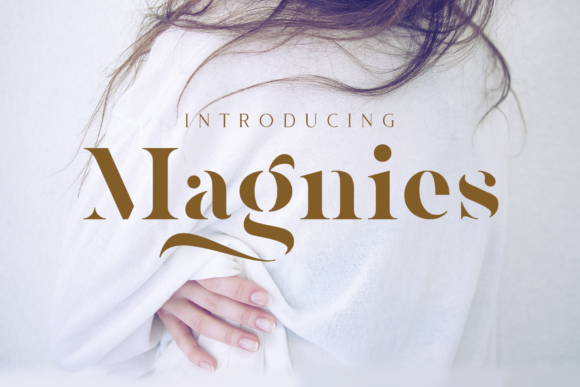
Imagine opening a design file and instantly feeling more confident—not because everything’s perfect, but because the typeface itself carries warmth, clarity, and quiet authority. That’s the experience many designers and communicators report when using Magnies. It’s not just another serif font. Magnies is an incredibly sweet and gorgeous serif font that will turn any design idea into a true standout—especially when authenticity, elegance, and readability need to coexist without compromise.
Why Type Choice Matters More Than You Think
Most people don’t notice fonts—until they do. A poorly matched typeface can make a brand feel distant, a blog post harder to finish, or a presentation feel unintentionally stiff. Magnies avoids those pitfalls by balancing traditional serif structure with soft, approachable curves. Its letterforms have gentle contrast, open counters, and subtle calligraphic influence—particularly visible in the lowercase a, e, and g. This isn’t decorative flourish for its own sake; it’s intentional human-centered design that supports comprehension and emotional resonance.
Where Magnies Shines in Real Work
Magnies excels where tone and trust matter most—and where visual hierarchy needs to feel intuitive, not engineered. Consider these everyday scenarios:
- Small business websites: A local bakery, handmade ceramics studio, or wellness coach benefits from Magnies’ warmth in headlines and body text. Unlike high-contrast serifs (think Bodoni or Didot), Magnies doesn’t demand attention—it invites it. Readers stay longer because the rhythm feels natural, not performative.
- Educational materials: Teachers and course creators use Magnies for handouts, slide decks, and PDF workbooks. Its generous x-height and clear spacing reduce eye fatigue during extended reading—critical for learners of all ages.
- Editorial layouts: Bloggers and independent publishers choose Magnies for long-form articles where voice matters. Its rhythm encourages steady pacing, and its character set includes true small caps, ligatures, and stylistic alternates—subtle tools that elevate professionalism without extra effort.
Creativity Without Compromise
Many designers hesitate to use serifs digitally, fearing they’ll look heavy or outdated on screens. Magnies was crafted with modern rendering in mind. Its hinting and spacing hold up well across devices—even at 16px on mobile. That means you’re not sacrificing aesthetics for accessibility. In fact, you gain both: the typographic richness of print tradition, optimized for today’s responsive environments.
What sets Magnies apart isn’t just how it looks—but how it behaves in context. Pair it with a clean sans-serif like Inter or Poppins for contrast that feels balanced, not jarring. Use its italic for pull quotes or emphasis—not as decoration, but as meaningful visual punctuation. Because Magnies has personality without shouting, it leaves room for your content, imagery, and ideas to breathe.
Who Benefits Most—and Why
Magnies resonates strongest with professionals who value craft but don’t have hours to fine-tune every kerning pair. Freelance designers appreciate its consistency across projects—from wedding invitations to SaaS landing pages. Educators find it accessible for students with mild dyslexia, thanks to its distinct letter shapes and even stroke weight. Entrepreneurs building personal brands often choose Magnies when they want sophistication without coldness—because it conveys care, not just competence.
That said, Magnies isn’t ideal for every situation. If you’re designing high-density data dashboards, legal disclaimers, or ultra-minimalist tech interfaces, a more neutral, functional typeface may serve better. Magnies thrives where emotion, identity, and narrative are central—not where pure utility dominates. It’s also worth noting that while Magnies offers excellent language support for Western European languages, users needing extended Cyrillic, Greek, or Asian character sets should verify coverage before committing to large-scale multilingual publishing.
Practical Tips for Getting Started
You don’t need advanced typography knowledge to use Magnies well. Here are three grounded recommendations:
- Start with hierarchy, not decoration: Use Magnies Regular for body copy and Magnies Bold for headings—no need for multiple weights unless your project demands nuanced emphasis. Its built-in optical sizing ensures legibility across sizes.
- Respect line length and spacing: At 100–110 characters per line (ideal for readability), Magnies performs best with generous leading—1.5× line height for web, 1.4× for print. Its generous counters mean tight tracking rarely helps; let the letters breathe.
- Test before you commit: Try Magnies in your actual environment—not just a font preview. Paste real copy into your CMS or design tool. See how it renders next to your brand colors, images, and interface elements. Typography reveals itself in context, not isolation.
A Thoughtful Alternative to Overused Options
Many creators reach for Georgia, Merriweather, or Lora out of habit—not because they’re the best fit, but because they’re familiar and widely available. Magnies offers a meaningful alternative: same serif category, different emotional signature. Where Merriweather feels scholarly and dependable, Magnies feels thoughtful and quietly confident. Where Georgia leans toward journalistic neutrality, Magnies adds a touch of humanity—like handwriting refined through careful iteration.
This distinction matters most when differentiation is hard-won. In crowded markets—coaching, creative services, indie publishing—small cues accumulate. A distinctive yet readable typeface like Magnies becomes part of your unspoken brand language. It signals intentionality. Not “I picked something pretty,” but “I chose something that helps people understand, remember, and feel something true.”
Final Insight: Typography as Quiet Advocacy
Good type doesn’t shout. It listens—to the reader, the message, the medium. Magnies reflects that principle. Its sweetness isn’t saccharine; it’s sincerity made visible. Its gorgeousness isn’t superficial; it’s the result of deliberate decisions about proportion, rhythm, and restraint. When you use Magnies, you’re not just selecting a font—you’re aligning your communication with values like clarity, empathy, and craftsmanship.
That alignment pays off in ways that compound: readers trust your content more quickly; clients perceive higher attention to detail; collaborators sense shared standards. And for creators working solo—juggling design, writing, and strategy—Magnies reduces decision fatigue. It’s a reliable partner, not another variable to manage.
If your goal is to communicate with both precision and heart, Magnies earns its place—not as a trend, but as a thoughtful tool. Get inspired by its unique charm. Then let it help you say what matters, in a way that lingers.