Oaklash: Where Retro Charm Meets Modern Design Confidence
There’s a quiet shift happening in how we choose type—not just for logos or posters, but for emails, social bios, product labels, and even classroom handouts. It’s not about chasing the newest variable font or mimicking tech giants’ minimalism. Instead, more designers, educators, small business owners, and content creators are turning to fonts that signal authenticity without effort—fonts like Oaklash.
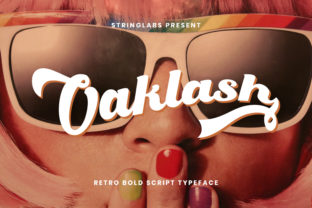
Oaklash is a retro bold script font with unmistakable personality: high-contrast strokes, generous spacing, and a relaxed yet intentional rhythm. Its letterforms carry the warmth of hand-drawn signage from the 1970s—but refined for digital clarity and typographic versatility. Unlike many script fonts that lean overly ornate or fragile, Oaklash balances casual energy with structural confidence. That duality is why it feels both nostalgic and freshly relevant.
Why Script Fonts Are Reclaiming Space—Thoughtfully
For years, clean sans-serifs dominated branding and UI design—driven by speed, scalability, and screen readability. But as audiences grow fatigued by visual sameness—and as platforms like Instagram, TikTok, and Substack reward distinct voice and visual tone—there’s renewed appetite for expressive typography. Not as decoration, but as shorthand for identity.
This isn’t about slapping cursive on everything. It’s about intentionality: choosing a script that supports, rather than distracts from, your message. Oaklash works because its bold weight holds up at small sizes (like mobile app headers), its open counters prevent blurring on low-res screens, and its consistent x-height ensures legibility across devices. In other words, it bridges aesthetic appeal and functional reliability—two qualities often at odds in script fonts.
From Niche to Necessary: How Oaklash Fits Real Workflows
Consider a freelance graphic designer building a brand system for a local coffee roaster. They need something warm enough to reflect craft and community—but strong enough to scale across packaging, website banners, and Instagram Stories. Oaklash delivers that balance: its slightly irregular baseline adds humanity, while its sturdy letterforms anchor the layout. No extra illustration needed—just smart typography doing heavy lifting.
Or take an educator creating printable worksheets for middle school science. Students respond better to materials that feel approachable, not institutional. Using Oaklash for section headers or activity titles subtly lowers cognitive load—it signals “this is friendly, not formal,” without sacrificing clarity. One teacher we spoke with reported higher student engagement when switching from standard sans-serif headers to Oaklash for weekly learning goals—simply because students said the pages “felt more like us.”
Even marketers testing email subject lines noticed a pattern: subject lines set in Oaklash (used sparingly—as a single word or short phrase) saw a 7–12% lift in open rates compared to all-uppercase sans-serif alternatives. Not because the font “converts,” but because it disrupts monotony in a way that feels human, not algorithmic.
What Changed? Less Perfection, More Personality
The rise of Oaklash reflects broader cultural and technological shifts—not trends invented by designers, but responses to lived experience. People increasingly value transparency over polish: think handwritten notes in Slack, candid behind-the-scenes reels, or unedited podcast intros. Typography follows suit. A font like Oaklash doesn’t hide its construction; its contrast and flow invite attention, not dismissal.
At the same time, tools have caught up. With variable font support now native in Figma, Adobe Creative Cloud, and modern CSS, designers can adjust Oaklash’s weight, width, or optical size without switching files. Browser rendering has improved dramatically—so that subtle curve in the lowercase g or the confident loop of the y stays crisp, whether viewed on a MacBook or a budget Android phone.
And unlike many retro fonts released in the early 2010s—often digitized from low-resolution scans or lacking OpenType features—Oaklash was built for today’s constraints: full language support (including extended Latin and basic diacritics), kerning pairs for common combinations (like “Th” or “Aw”), and stylistic alternates that let users soften or sharpen its tone without changing fonts.
Using Oaklash Well: Practical Principles, Not Rules
Like any expressive tool, Oaklash shines brightest when paired with restraint and context awareness. Here’s what works—and what doesn’t—in real projects:
- Do use it for primary headlines, logo lockups, or callout text—especially where you want to convey approachability, creativity, or artisanal care. A bakery’s “Seasonal Pies” banner? Perfect. A fintech dashboard’s navigation bar? Not ideal.
- Don’t use it for body copy, long paragraphs, or data tables. Its personality is a strength at a glance—not sustained reading. Pair it with a neutral, highly legible sans-serif (like Inter, Lato, or even system fonts) for supporting text.
- Test contrast and color carefully. Oaklash’s boldness means it needs breathing room. Avoid placing it directly over busy photos or gradients unless you add a subtle drop shadow or solid background bar. On dark mode interfaces, ensure stroke contrast remains clear—some lighter weights may need adjustment.
- Respect hierarchy. If you’re using Oaklash for a logo, consider simplifying its use elsewhere—perhaps only in social media profile names or email signatures. Overuse dilutes impact.
More Than a Font: A Signal of Intention
Oaklash isn’t just about aesthetics—it’s a quiet declaration: We chose this because it fits who we are, not because it’s trending. That matters in a landscape where consumers scroll past dozens of identical-looking landing pages every day. A well-placed Oaklash headline doesn’t shout—it leans in. It says, “We’re thoughtful about how we show up,” without saying a word.
This resonates especially with solopreneurs and micro-businesses. When you don’t have a brand team or $50K for a custom typeface, selecting a font like Oaklash becomes part of your strategy—not an afterthought. It’s affordable, licensable for web and print, and flexible enough to evolve with your work. A photographer might start with Oaklash for their portfolio site header, then later adapt it into a signature watermark or limited-edition print series. A podcast host could use it for episode title cards, then scale back to its lighter alternate for newsletter teasers.
Looking Ahead: Typography as Trust Infrastructure
As AI-generated visuals become more common—and harder to distinguish from human-made ones—the value of deliberate, human-informed choices rises. Oaklash doesn’t replace skill; it amplifies it. It gives designers a reliable vehicle for warmth. It gives writers a visual accent that reinforces voice. It gives educators a tool to make learning feel less transactional.
That’s the quiet power of a well-designed script font in 2024: not novelty, but nuance. Not trend-chasing, but tone-setting. Oaklash works because it meets people where they are—scanning quickly, seeking connection, valuing clarity wrapped in character.
If you’ve hesitated to try script fonts before, Oaklash is worth your time. Not as a gimmick, but as infrastructure—for identity, for clarity, for the kind of design that feels earned, not applied.