West: The Urban Script Font That Turns Everyday Design Into Statement-Making Energy
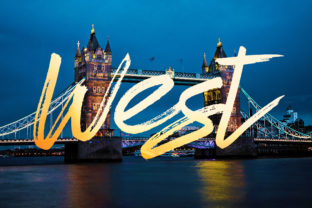
West isn’t just another script font—it’s a visual pulse drawn from graffiti tags, street signage, late-night neon reflections, and the confident slant of handwritten notes passed between creatives. Designed with intentional imperfection and rhythmic flow, West balances legibility with attitude. It’s not “cute” or “elegant” in the traditional sense—instead, it feels alive, grounded, and unmistakably modern. If your design needs to whisper authenticity while shouting presence, West is often the quiet confidence behind the voice.
Where West Fits Naturally—Without Forcing It
You don’t need a “big project” to justify using West. In fact, its greatest strength shines in everyday moments where personality matters more than polish:
- Coffee shop chalkboard menus—West adds warmth and local character without looking staged. Its slightly uneven baseline and subtle weight shifts mimic hand-lettered signs, making customers feel like they’re part of an ongoing story—not just reading a list.
- Independent fashion brand labels and tags—Think limited-run tees, handmade jewelry packaging, or small-batch denim hangtags. West gives tactile credibility. It doesn’t scream “luxury”—it says “this was made by someone who cares about how it looks *and* feels.”
- Event posters for underground music nights, poetry slams, or neighborhood art walks—Here, West bridges readability and vibe. Unlike overly ornate scripts that vanish at a glance, West holds up at medium sizes and gains energy when scaled large on wheatpaste posters or digital banners.
- Instagram story text overlays and Reels captions—Its open letterforms and generous spacing prevent pixelation on mobile screens. When paired with bold sans-serif body text, West becomes the emotional anchor—not decoration, but emphasis with intention.
Who Gets the Most Out of West—and Why
It’s tempting to assume script fonts are only for “creative types,” but West serves a surprisingly wide range of professionals—each in their own way:
Small business owners appreciate how West helps them stand out without hiring a full branding studio. A local plant shop using West for its weekly newsletter subject line (“Your Weekend Vibes, Delivered 🌿”) instantly signals care and curation—not corporate automation. No extra explanation needed. Just resonance.
Freelance designers reach for West when clients ask for “something fresh but not trendy”—especially those wary of fonts that age poorly. Because West avoids extreme flourishes or nostalgic clichés (no swooshes, no vintage ink blots), it stays useful across seasons and platforms. One designer told us she’s reused West across three different client industries—bakery, podcast, and boutique fitness—by simply adjusting color, spacing, and pairing.
Educators and community organizers use West to humanize materials that might otherwise feel bureaucratic. A neighborhood association flyer announcing a cleanup day gains approachability when the headline reads “Let’s Make This Block Shine” in West—while bullet points stay crisp in a neutral sans. It subtly says, “We’re people, not paperwork.”
Real-World Pairings That Just Work
West thrives in contrast. Its urban rhythm lands best when grounded by something steady. Here’s what actually works in practice—not theory:
- With Inter or Manrope—Clean, geometric sans-serifs keep West from feeling overwhelming. Use West for headlines and short quotes; switch to Inter for body copy, forms, or instructions. This combo powers dozens of indie newsletters and SaaS landing pages where tone matters as much as function.
- With a warm mono-spaced font like IBM Plex Mono—Unexpected, yes—but effective for tech-adjacent brands wanting to soften their edge. Think developer tooling docs or coding workshop announcements. West adds humanity; the monospace adds precision.
- With hand-drawn icons or textured backgrounds—Not as “more is more,” but as intentional layering. A West-drawn logo over a scanned paper texture feels tactile and trustworthy—ideal for artisanal food brands or ceramic studios.
Things to Keep in Mind Before You Type “West” Into Your Design Tool
Like any strong voice, West asks for thoughtful listening—not just loud usage.
Legibility at small sizes is limited—and that’s by design. Don’t force West into 10pt captions or dense footnotes. It’s built for impact, not exposition. If you need script-style charm in tight spaces, consider West’s lighter weight variant (if available) or pair a single West word—like “Now” or “Yes”—with highly readable body type.
Kerning matters more here than in most fonts. West’s rhythm relies on natural spacing between letters. Auto-kerning in some apps may tighten things too aggressively, especially around “AV”, “To”, or “We”. Spend two minutes adjusting key pairs—it pays off in perceived polish.
It doesn’t solve weak hierarchy. Slapping West on top of cluttered layouts won’t create clarity. Use it to elevate *already intentional* structure—not mask confusion. If your layout feels busy, simplify first. Then let West bring the soul.
Color choices change its temperature dramatically. In charcoal gray on off-white, West feels grounded and calm. In electric cyan on black, it pulses like a club sign. In terracotta on cream, it evokes sun-baked brick and slow mornings. Test it in context—not just on a white mockup.
When West Might Not Be the Right Call
That said, honesty matters. West isn’t magic—and misusing it can dilute its power:
- Corporate annual reports—Unless the company is deliberately rebranding with radical authenticity (e.g., a sustainable apparel giant pivoting to raw storytelling), West may clash with expectations of gravitas and continuity.
- Medical or legal disclaimers—Clarity and neutrality are non-negotiable. Save West for the friendly “Welcome” banner—not the fine print about liability or dosage.
- Brands built on heritage or tradition—A century-old bookstore or classical music festival may find West too forward-leaning. There, a serif with historical weight often resonates deeper.
None of this means West is “limited.” It just means it has integrity—it shows up fully, and asks the same in return.
One Last Thought—From Practice, Not Theory
A graphic designer in Portland shared something simple but telling: She used West for a mural project with high school students—letting them hand-trace letters from printed West outlines onto walls. They didn’t care about kerning or x-heights. They cared that the letters felt like *them*: quick, expressive, unapologetically theirs. Months later, alumni still tag photos with that same West-inspired phrase in their Instagram bios.
That’s the quiet power of West—not perfection, but permission. Permission to be present, to reflect real culture, and to make design feel less like output and more like contribution.