Angelina: A Strategic Choice for Authentic, High-Impact Visual Communication
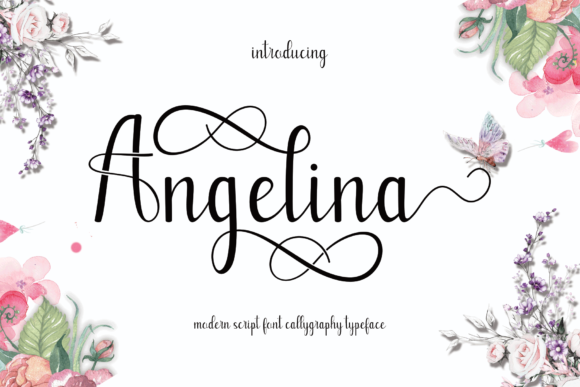
Angelina isn’t just another script font—it’s a carefully crafted tool designed to elevate intentionality in visual communication. As a romantic, soft hand-lettered calligraphy typeface, Angelina delivers an authentic tactile quality that digital precision often lacks. Its deliberate imperfections—subtle variations in stroke weight, organic curves, and natural flow—signal human care. That authenticity resonates deeply with audiences who increasingly value sincerity over polish, especially in emotionally charged contexts like weddings, personal milestones, or heartfelt brand messaging.
Why Angelina Fits Into Thoughtful Design Strategy
Choosing a font is rarely about aesthetics alone—it’s a strategic decision with downstream effects on perception, engagement, and recall. Angelina supports goals rooted in emotional resonance and differentiation. In crowded digital spaces where generic sans-serifs dominate headlines and social feeds, Angelina offers immediate visual distinction without sacrificing readability or elegance. Its two complementary styles—regular and italic—allow for nuanced hierarchy: use the regular for primary statements (e.g., “Forever Yours” on an invitation), and the italic for subtle emphasis or secondary lines (“A celebration of love, February 14th”). This duality supports clear information architecture, not just decoration.
Crucially, Angelina is PUA encoded. That technical detail matters: it means every swash, alternate glyph, and ligature is accessible directly through standard keyboard input—not buried in obscure font panels or requiring design software expertise. For time-constrained creators—freelancers building client assets, small business owners crafting seasonal campaigns, educators designing classroom materials—this reduces friction and increases consistency. You’re not spending hours hunting for a flourish; you’re making intentional stylistic choices within seconds.
Where Angelina Delivers Measurable Value
Strategic application begins with alignment between medium, message, and audience. Angelina excels where warmth, intimacy, or tradition strengthens your objective:
- Wedding stationery: Invitations, menus, and signage benefit from Angelina’s lyrical rhythm. It signals care in curation—not just event planning, but relationship storytelling. When couples invest in premium paper and printing, Angelina complements that investment by reinforcing craftsmanship at the typographic level.
- Valentine’s Day marketing: Social posts, email headers, or limited-edition product labels gain emotional weight with Angelina. Unlike overly ornate scripts that sacrifice legibility at small sizes, Angelina balances decorative potential with functional clarity—even at 24px on mobile screens.
- Personal branding for service-based professionals: Coaches, therapists, and wellness practitioners often seek fonts that reflect empathy and presence. Angelina’s softness avoids sterility without veering into childishness—a rare middle ground for voice-driven positioning.
- Educational or creative resources: Printable planners, journal prompts, or workshop handouts feel more inviting when typography suggests approachability. Angelina subtly lowers cognitive load—readers feel welcomed, not instructed.
Using Angelina Intentionally—Not Automatically
Like any powerful tool, Angelina carries risk when applied without context. Overuse dilutes impact. Applying it to body text, technical documentation, or data-heavy reports undermines credibility—its strength lies in expressive, short-form applications, not sustained reading. Similarly, pairing Angelina with clashing typefaces (e.g., ultra-bold geometric sans-serifs) can create visual tension that distracts rather than delights. Strategic pairing matters: consider neutral, well-spaced sans-serifs like Inter, Lato, or Montserrat for supporting text—fonts that recede gracefully so Angelina shines where it should.
Also consider platform constraints. While Angelina renders beautifully in print and static digital assets (PDFs, PNGs, SVGs), it cannot be embedded as web font without licensing compliance and proper hosting. Using it in live web copy without fallbacks risks broken display or accessibility failures. For websites, reserve Angelina for logo treatments, hero graphics, or downloadable assets—and always test contrast ratios against background colors to ensure WCAG compliance.
Practical Planning Tips Before You Implement
Before adding Angelina to your next project, ask three questions:
- What emotion or action do I want this element to evoke? If the answer is “urgency,” “authority,” or “technical precision,” Angelina likely isn’t the right fit. But if it’s “tenderness,” “celebration,” or “personal connection,” it’s worth exploring.
- How much space does this element occupy in the user’s attentional field? Angelina works best when it commands focus—not lost in dense layouts. Give it breathing room: generous margins, ample line spacing in paired text, and high-contrast backgrounds.
- Is this part of a repeatable system—or a one-off? If you’re building a brand identity, document how and when Angelina appears (e.g., “Angelina italic used only for taglines in print collateral; never in UI”). Consistency compounds recognition. Random usage erodes trust in your visual language.
Long-Term Positioning Benefits
Brands and creators who invest in considered typography often see compounding returns—not immediately, but over time. Angelina contributes to what designers call “recognition memory”: after seeing it across multiple touchpoints (a wedding invite, a holiday card, a boutique’s packaging), audiences begin associating its warmth with your voice or values. That’s not possible with default system fonts or trending-but-generic alternatives.
Moreover, Angelina’s support for alternate glyphs and ligatures enables evolution without reinvention. You can refresh seasonal designs by swapping swashes or enabling contextual alternates—keeping visual continuity while signaling novelty. That flexibility supports long-term brand agility, especially for small businesses adapting to shifting customer expectations without overhauling core identity.
Final Strategic Consideration: Licensing and Scalability
Angelina is typically licensed per use case—desktop, web, app, or merchandise. Misalignment here creates operational risk: using a desktop license for client-facing web banners may violate terms and expose both you and your client to legal exposure. Always verify licensing scope before committing to Angelina in deliverables. For agencies or studios managing multiple clients, consider extended or multi-user licenses upfront—they cost more initially but prevent costly rework or compliance gaps later.
Equally important is file management discipline. Because Angelina relies on OpenType features, saving final artwork as editable source files (e.g., .PSD, .AI) ensures future access to swashes and alternates. Exporting only flattened JPEGs or PDFs locks you out of those expressive options down the line—limiting your ability to iterate or repurpose assets efficiently.
Ultimately, Angelina rewards intention. It doesn’t replace strategy—it amplifies it. When chosen deliberately, implemented consistently, and aligned with real human outcomes—not just visual trends—it becomes more than a font. It becomes part of how people feel when they encounter your work. And in a world saturated with noise, that feeling is among the most valuable differentiators you can offer.